

A practical guide to what aging in place actually takes — for seniors who want to stay home and for the families who want to help them do it safely.
The Bottom Line Up Front
- Aging in place is possible for most seniors — but it requires honest assessment, proactive planning, and the right support systems in place before a crisis forces the issue.
- The biggest barriers are rarely medical. They’re environmental, logistical, and emotional — and most of them are addressable with the right knowledge and the right help.
- Getting around, managing daily tasks, and staying connected matter just as much as home modifications. This guide covers all of it.
- Bringing in help is not giving up on independence. Done early and thoughtfully, it’s how independence is extended.
- The families who navigate this best are the ones who plan ahead, have honest conversations, and build a support system before they urgently need one.
What Aging in Place Really Takes
“Aging in place” sounds simple. Stay in your home as you get older. The desire is nearly universal — according to AARP’s 2024 Home and Community Preferences Survey, 75% of adults 50 and older want to stay in their homes for the long term.
But wanting to stay home and being set up to do it safely are two different things. Most homes weren’t built with aging bodies in mind. Most families haven’t had the hard conversations. And most seniors — and their families — don’t think seriously about any of it until something happens.
Consider what it takes to lose mobility — even temporarily. A foot surgery. A hip replacement. A fall. A stroke. Suddenly a home that felt perfectly comfortable becomes an obstacle course. The bathroom that was never a second thought becomes a hazard. The stairs become a daily negotiation. Simple tasks like bathing, dressing, getting to the kitchen — tasks that took no thought at all — require planning, effort, and sometimes help.
This is the daily reality for millions of seniors. And for their families, who are often trying to help from a distance while managing their own lives.

Aging in place isn’t about winning. Nobody stays home forever. It’s about buying time — time measured in quality of life, dignity, and the comfort of familiar surroundings — and making a thoughtful transition when the time comes, rather than a crisis-driven one. Falls alone send more than 3 million older adults to emergency rooms each year, and most happen at home. This guide is about how to make home as safe and livable as possible, for as long as it makes sense.
Start Here: An Honest Assessment
Before anything else — before modifying the home, buying a device, or arranging care — the most important step is an honest look at the current situation. This conversation is hard. Seniors often don’t want to admit they need help. Families don’t want to push. But having it before a crisis is always better than having it after one.
Questions to Ask About the Person
- Can they move safely around the home? Are there rooms or areas they avoid?
- Are they managing medications reliably, or are doses being missed or confused?
- How is their balance? Any falls or near-falls in the past year?
- Are they eating regularly and maintaining a healthy weight?
- Are they keeping up with personal hygiene — bathing, grooming, laundry?
- Are they socially connected, or showing signs of isolation or withdrawal?
- Do they have a progressive condition — Parkinson’s, dementia, heart failure — that is changing their care needs?
Questions to Ask About the Home
- Are there stairs to navigate daily to get in, to reach the bedroom, or to access the bathroom?
- Is the bathroom safe? Is there a grab bar by the toilet and in the shower?
- Is there adequate lighting in hallways, stairways, and the bathroom at night?
- Are there loose rugs, uneven thresholds, or other trip hazards?
- Can the person get in and out of the shower or tub safely and independently?
- Is the bedroom on the main floor, or does sleeping downstairs need to be considered?
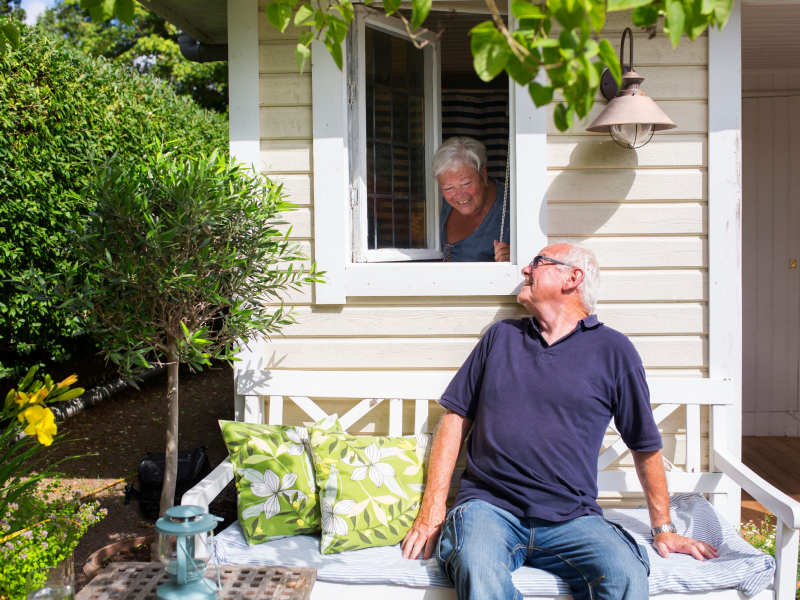
A home safety assessment by an occupational therapist or a Certified Aging-in-Place Specialist (CAPS) is one of the most valuable and underused tools available to families. These professionals are trained to evaluate how a person functions in their specific environment and to recommend practical, personalized modifications. You can find a CAPS-certified specialist through the NAHB CAPS directory. Many OT assessments are covered by Medicare following a hospitalization or qualifying medical event — a physician referral is typically required.
The Home Environment: What Has to Change
Most homes were built for healthy adults at their physical peak. They weren’t designed with aging bodies in mind — the balance changes, the reduced grip strength, the slower reaction times, the increased fall risk that come with age. The good news is that targeted modifications can transform a home’s safety and usability, often at modest cost.
The areas that matter most, in order of priority:
The Bathroom
The bathroom is where the greatest risks concentrate — hard surfaces, wet floors, awkward movements, and privacy. It is the most common location for falls in the home and deserves the most attention. The highest-impact changes are grab bars at the toilet and shower (properly anchored, not a towel bar), a shower seat or bench, a handheld showerhead, and non-slip surfaces. A walk-in shower — eliminating the step over a tub edge — is the gold standard for aging-in-place bathrooms.
Entrances and Getting In the Door
Even one or two steps at a front entrance can become a serious barrier with a walker or wheelchair. A ramp, a handrail on both sides of any steps, good exterior lighting, and keyless entry address the most common entry challenges. A no-step entry — flush with the exterior grade — is the ideal long-term solution.
Stairs and Vertical Movement
Stairs deserve an honest, forward-looking conversation. Sturdy railings on both sides, good lighting with switches at top and bottom, and a plan for single-floor living are the starting points. A stairlift is a meaningful but transformative investment for seniors in multi-story homes who want to stay but can’t safely manage stairs.
Throughout the Home
Remove loose rugs — they are a leading cause of falls and should be eliminated or secured completely. Improve lighting everywhere, especially in hallways and the bedroom-to-bathroom path at night. Replace round doorknobs with lever handles. Smooth uneven thresholds between rooms. These changes are inexpensive and high-impact.
Getting Around: Mobility Inside and Outside the Home
One of the most underappreciated dimensions of aging in place is mobility — not just whether a person can walk, but how they actually move through their home and their community day to day. The right equipment, introduced at the right time, can extend independence significantly and prevent the falls that often trigger a care crisis.
Inside the Home
- Cane: The most basic mobility aid — appropriate when someone needs light balance support or has mild weakness on one side. Proper height and technique matter; a physical therapist can help with fitting and instruction.
- Standard walker: Four-point stability for those who need more than a cane. Requires lifting with each step, which can be tiring for longer distances.
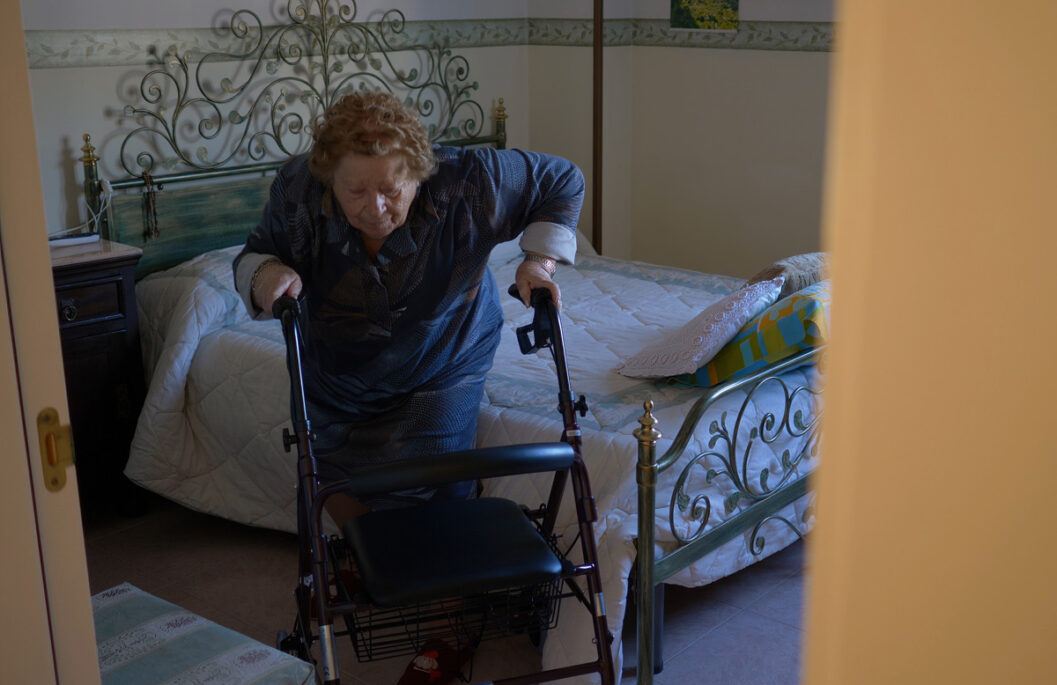
- Rollator (wheeled walker): A walker with wheels, a built-in seat, and hand brakes. No lifting required. The seat allows rest breaks. One of the most practical everyday mobility aids available — useful both indoors and outdoors.
- Grab bars and fixed wall support: Strategically placed bars along key routes — in the hallway, next to the toilet, in the shower — create a network of support points throughout the home.
- Bed and chair lift assists: Motorized cushions and chair-mounted devices that make getting up from a seated position much easier — particularly valuable after surgery or with lower-body weakness.
Outside the Home and in the Community
- Rollator: Works equally well outdoors and is excellent for appointments, errands, and community outings. Most fold flat for transport.
- Knee scooter: A practical and underappreciated option for non-weight-bearing recovery — foot or ankle surgery, fractures. Far easier than crutches for most people, and much less fatiguing. If a parent is facing lower-leg surgery, knowing about knee scooters before the surgery date is worth a great deal.
- Transport wheelchair: A lightweight wheelchair pushed by a companion — not self-propelled. Useful for longer outings when walking fatigue is a concern, or during recovery periods.
- Power wheelchair or mobility scooter: For seniors with more significant mobility limitations who want to remain active in their community. Range from compact indoor chairs to outdoor scooters with meaningful range.
- Vehicle modifications: Swivel seats, hand controls, ramps, and lifts can allow seniors to continue driving or be transported safely long after standard vehicles become difficult to navigate.
A physical or occupational therapist can provide a formal mobility assessment and recommend the right equipment for the specific situation. Many mobility aids are covered by Medicare Part B as durable medical equipment when medically necessary — a physician’s order is typically required.
Adapting Daily Life: The Practical Realities
Beyond the home environment and mobility equipment, aging in place requires adapting the routines of daily life in ways that preserve dignity and independence while honestly accommodating changing abilities. This is the part most guides skip. It’s also the part families are often most unprepared for.
Bathing and Personal Hygiene
Bathing is one of the first daily activities to become difficult as mobility or balance changes — and one of the most emotionally sensitive to address. The key is making the environment as safe as possible before a problem forces the conversation.
- A shower seat or bench makes showering seated the default, not the exception
- A handheld showerhead extends reach and eliminates the need to twist and turn
- Long-handled bath brushes extend reach for washing lower legs and feet
- Liquid soap dispensers mounted to the wall eliminate fumbling with bar soap on a wet surface
- A bathrobe or towel on a hook just outside the shower means less time standing wet on a slippery floor
When bathing assistance becomes necessary — temporarily after an injury, or on an ongoing basis as needs change — a home care aide can provide this help at home with dignity and without a facility transition. See our guide to personal care and in-home assistance for what that looks like in practice.
Dressing
- Elastic waistbands, Velcro closures, and magnetic buttons reduce the dexterity required for dressing
- A long-handled shoehorn and elastic shoelaces eliminate the need to bend
- A dressing stick helps with pulling up pants or reaching items without bending or twisting
- Organizing clothing in consistent, easy-to-reach locations reduces daily decision fatigue
Cooking and Eating
- Lightweight pots and pans reduce strain — heavy cookware becomes genuinely dangerous as grip and upper-body strength decline
- A rolling cart or trolley allows transporting items from kitchen to table without carrying
- A perching stool at the kitchen counter allows meal preparation while seated
- Jar openers, ergonomic utensils, and non-slip mats under cutting boards make cooking safer with arthritic hands
- Grocery delivery and prepared meal services reduce the daily burden of cooking without sacrificing the independence of eating at home
Managing Medications
Medication management is one of the most significant safety concerns for older adults living alone. Complex multi-drug regimens, changing dosages, and the real consequences of missed or doubled doses make this an area that deserves serious attention — often before families realize it has become a problem.
- A simple weekly pill organizer — sorted by a family member during a regular visit — is one of the most effective interventions available
- A daily medication checklist posted in a visible location provides a reliable, low-tech reminder
- Pharmacy blister packs pre-sort medications by day and time, eliminating the pillbox entirely
- A designated family member who checks in on medications regularly provides accountability and catches problems early

Staying Connected: The Health Risk Nobody Talks About Enough
Social isolation is one of the most serious and underappreciated health risks for older adults living alone. The National Institute on Aging links chronic loneliness to significantly higher rates of depression, cognitive decline, heart disease, and earlier death. Staying connected isn’t a quality-of-life nice-to-have. It’s a health imperative.
- Regular, scheduled calls or video calls with family — consistent and predictable, not sporadic
- Community connection through a senior center, religious community, book club, or volunteer activity
- A companion caregiver — even a few hours a week — provides consistent human contact, conversation, and engagement for seniors who are otherwise alone for long stretches
- Transportation assistance for appointments and outings — losing the ability to drive is one of the most isolating events in an older adult’s life, and addressing transportation proactively preserves participation in the world outside the home
Technology as a Support Layer
Technology is not the foundation of aging in place. The right home environment, the right mobility equipment, and the right human support matter more than any device. But used thoughtfully, technology can close meaningful gaps — particularly for families managing from a distance.
Five categories are worth knowing about:
- Personal emergency response systems: Wearable devices that allow a senior to call for help with the press of a button. The most established category of senior safety technology. Many now include automatic fall detection.
- Voice assistants: Smart speakers that allow seniors to set reminders, make calls, control smart home features, and access information — entirely hands-free. Particularly useful for those with limited mobility or arthritis.
- Medication management devices: Automated dispensers that release the correct medication at the correct time and notify family members if a dose is missed.
- Remote activity monitoring: Sensor-based systems that learn a senior’s normal daily patterns and alert family members to significant changes — without cameras or intrusive observation.
- Smart home safety devices: Motion-activated lighting, smart locks, video doorbells, smart thermostats, and stove safety devices that add passive safety to the home environment.
The most important principle when introducing technology: involve the senior in the decision, start with one device that solves a real problem, and let it become familiar before adding more. Technology imposed without buy-in is technology that won’t be used.
Coming soon: Our complete guide to smart home devices and technology for aging in place →
When to Bring In Help — and What That Looks Like
One of the most common mistakes families make is waiting too long to bring in professional support. By the time a crisis forces the decision — a fall, a hospitalization, a medication error that couldn’t be ignored — options are limited and transitions are rushed. Bringing in help is not giving up. It is, in fact, the most reliable way to stay home longer.
Signs It’s Time to Add Professional Support
- Declining hygiene — body odor, unchanged clothing, unwashed hair or dental neglect
- Weight loss or signs of poor nutrition
- A fall, or multiple near-falls in the past year
- Missed medications, double doses, or confusion about a drug regimen
- Unpaid bills, unopened mail, or financial confusion
- A new or progressing diagnosis — Parkinson’s, stroke, advancing dementia
- Increasing social withdrawal, anxiety, or signs of depression
- A family caregiver who is becoming exhausted or overwhelmed
What In-Home Care Looks Like
Professional in-home care ranges from a few hours of companionship and household help each week to full-time around-the-clock support. It can be introduced gradually — starting with the tasks that are most burdensome or most risky — and scaled as needs change.
- Companion care: Social engagement, light housekeeping, meal preparation, transportation, and medication reminders. No hands-on personal care.
- Personal care: Everything companion care includes, plus hands-on help with bathing, dressing, grooming, toileting, and mobility.
- Skilled home health: Nursing care, physical therapy, and other medical services delivered at home by licensed professionals. Often covered by Medicare when physician-ordered.
For a full breakdown of service levels, see our guide to personal care vs companion care. To find vetted providers in your area:
→ Search In-Home Care Providers Near You
Having the Conversation with Your Loved One
Everything in this guide depends on one thing that doesn’t come in a box or install in a weekend: an honest conversation. Between a senior and the people who love them. About what’s changing, what help looks like, and what they want the next chapter to look like.
These conversations are hard. Most seniors are acutely aware of what accepting help implies, and resistance is a completely understandable response to feeling like independence is slipping away. The way the conversation is framed matters as much as what is said.
- Start early, before a crisis. A conversation about planning for the future lands very differently than one forced by a fall or a hospitalization. There is no such thing as starting too early.
- Lead with their goals, not your fears. “I want to help you stay in your home as long as possible” is a very different conversation opener than “we’re worried about you.” Both may be true. Only one invites collaboration.
- Involve them in every decision. Modifications, technology, care arrangements — all of these work better when the senior is a participant in choosing them, not the recipient of decisions made without them.
- Take it one step at a time. You don’t have to solve everything at once. Starting with one grab bar, or one conversation about what they’d want if something happened, is a beginning — not a commitment to a full care plan.
- Acknowledge what’s hard. Accepting help with bathing, having a stranger in the house, giving up the car keys — these are real losses. Acknowledging them honestly doesn’t undermine the case for making a change. It builds the trust that makes change possible.
- Come back to it. This is not a single conversation. It’s an ongoing one, revisited as circumstances change. The families who do this best treat it as a regular check-in, not a crisis intervention.
Where to Go From Here
Aging in place is a journey, not a single decision. The families who manage it best are the ones who take stock of where things are honestly, make changes proactively, and build a support system that can grow as needs grow.
A few good next steps:
- Walk through the home safety checklist and identify the one or two highest-priority modifications to make this month
- Understand the levels of senior care — from companion care through memory care — so you know what options exist before you need them
- Compare assisted living vs in-home care — a detailed cost and care comparison for when that decision point approaches
- Search for in-home care providers near you — not because you need them today, but because knowing your options is itself a form of preparedness
This guide is for general informational purposes and does not constitute medical, legal, or financial advice. Home modification needs, mobility equipment, and care requirements vary by individual. We recommend consulting with a qualified occupational therapist, physical therapist, or licensed senior care advisor for guidance specific to your situation.