

There’s no place like home — and for the vast majority of older adults, that feeling is deeply held. According to AARP’s most recent Home and Community Preferences Survey, 75% of adults 50 and older want to stay in their own homes as they age. Yet only about 10% of U.S. homes are considered “aging-ready”, meaning they have the features — step-free entry, a first-floor bedroom and full bath, and at least one accessibility feature — to support independent living over time.
The gap between where people want to live and whether their home can actually support them safely is wide. But it is closeable. With the right planning, targeted modifications, the right technology, and knowing when to bring in professional support, aging in place is a realistic goal for most families.
This is the room-by-room modifications reference that supports our aging-in-place guide. If you’re still working through whether aging in place is the right choice, how to assess your situation honestly, or how to have the care conversation with your family, start with “How to Age in Place: The Complete Guide for Seniors and Families.” This article focuses on the specifics: what to modify, what it costs, how to fund it, and the professional team you need behind you. For a broader look at all care options, see our guide to the different levels of senior care.
Before You Start Modifying: A Note on the Bigger Picture
Home modifications are only one part of aging in place successfully. Before spending anything on the home, it’s worth stepping back to ask whether aging in place is the right plan for your situation, what an honest assessment of the person and the home looks like, and how to have that conversation as a family. Our companion guide, “How to Age in Place: The Complete Guide for Seniors and Families,” covers all of that — including mobility equipment, daily living adaptations, and knowing when professional care should enter the picture. This article focuses specifically on what to modify, what it costs, and how to pay for it.

Start with a Home Safety Assessment
Before spending a dollar on modifications, walk through the home systematically — ideally with an Occupational Therapist (OT) or a Certified Aging-in-Place Specialist (CAPS). These professionals are trained to identify hazards and recommend modifications specific to your loved one’s physical condition and home layout.
A CAPS specialist — a designation offered through the National Association of Home Builders — can assess the full property and provide a phased plan that fits both the current situation and anticipated future needs. You can find a CAPS-certified professional near you here.
Even without a professional assessment, a basic self-audit covers the most common fall zones. According to the CDC, falls are the leading cause of injury-related emergency visits for adults 65 and older, causing roughly 3 million emergency room visits per year and costing the healthcare system over $50 billion annually. The majority happen at home — and the majority are preventable.
A quick home safety audit should cover the following areas:
- Are all stairways well-lit with handrails on both sides?
- Are there grab bars in the shower/tub and next to the toilet?
- Are all area rugs secured with non-slip backing or removed entirely?
- Is there a clear, unobstructed path from the bedroom to the bathroom?
- Are electrical cords and clutter cleared from walkways?
- Is the home’s exterior entrance step-free or ramped?
- Are light switches and thermostats reachable without stretching?
- Is there adequate lighting throughout, especially at night?
Room-by-Room Modifications Guide
The Bathroom: Highest Priority
Ask any emergency physician where older adults are most frequently injured, and the answer is almost always the bathroom. Wet surfaces, hard fixtures, tight spaces, and the physical demands of bathing create a perfect storm of fall risk. A 2025 systematic review confirmed that bathroom modifications — particularly grab bars and non-slip surfaces — were present in 100% of effective home modification interventions studied.
What to do first:
- Install grab bars at the toilet and in the shower/tub. This is modification #1 for any aging-in-place plan. Bars must be anchored into wall studs — never use adhesive-only mounting for weight-bearing support. Professional installation runs $150–$400 per bar.
- Add non-slip surfaces. Apply non-slip decals or a textured mat to the tub/shower floor. These cost under $30 and take minutes to install.
- Install a handheld showerhead. A $40–$120 upgrade that dramatically improves safety and comfort for those with limited mobility or who bathe seated.
- Add a shower seat or bench. A fold-down teak bench or a basic shower chair ($50–$200) eliminates the need to stand throughout a shower.
- Raise the toilet height. A raised toilet seat with armrests ($30–$200) reduces the strain of sitting and standing. A comfort-height toilet (ADA height) is the more permanent solution at $300–$800 installed.
- Consider a walk-in shower conversion. Eliminating the step-over lip of a traditional tub is one of the most impactful mid-range investments. Costs range from $3,000 for a basic conversion to $12,000+ for a full roll-in shower with universal design features.
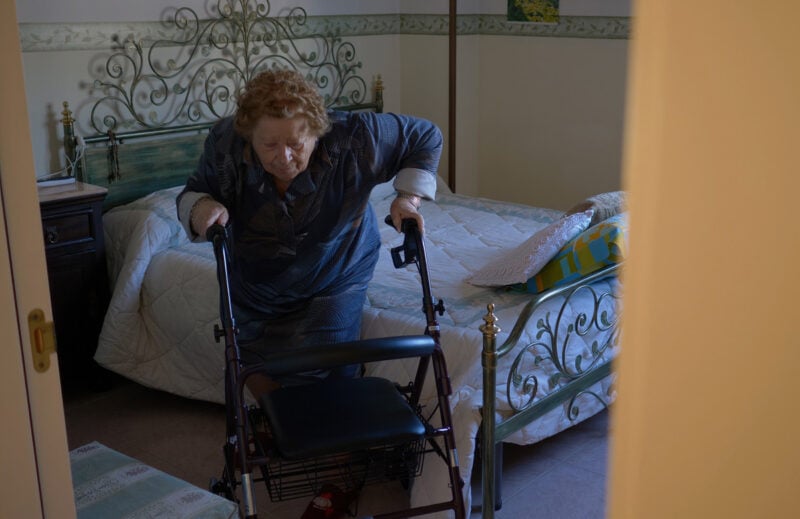
The Bedroom: Sleep and Nighttime Safety
Nighttime bathroom trips are responsible for a disproportionate share of falls in older adults. The path from bed to bathroom — often navigated in low light, half-asleep — is one of the most dangerous routes in the home.
- Move the bedroom to the main floor if possible. This single change eliminates stair navigation entirely for daily use, and is the most impactful structural decision in a two-story home.
- Install motion-activated path lighting. Plug-in LED night lights with motion sensors ($15–$60 each) along the bedroom-to-bathroom route provide automatic illumination exactly when it’s needed.
- Add a bed rail or half-rail. A half bed rail ($40–$120) makes getting in and out of bed significantly easier and reduces fall risk during transfers.
- Check bed height. Beds that are too low or too high create transfer hazards. Bed risers ($20–$50) or a lower bed frame can correct the issue without furniture replacement.
- Clear a clutter-free path. Remove furniture or objects from the bedroom-to-bathroom route entirely. Nothing should require stepping around at 2 a.m.
The Kitchen: Accessibility and Independence
The kitchen represents both a significant independence asset — the ability to prepare meals at home — and a meaningful risk zone for burns, cuts, and falls. Modifications here tend to be less urgent than bathroom safety but matter greatly for long-term quality of life.
- Replace round doorknobs with lever handles. Lever handles are dramatically easier to operate for hands affected by arthritis. Each handle costs $25–$80; the whole home can be converted for a few hundred dollars.
- Install a single-lever faucet with an anti-scald valve. Easier to operate than two-handle faucets, and the anti-scald valve prevents burns from temperature spikes — a real risk when nerve sensitivity diminishes.
- Reorganize for reachability. Move frequently used items to countertop level or lower cabinets. Reaching overhead or bending low are common injury triggers.
- Add under-cabinet lighting. Improves task visibility significantly for adults with age-related vision changes. LED strip kits run $30–$80 for a full kitchen.
- Install a pull-out stool or seated work area. Being able to sit while preparing meals extends the ability to cook independently as standing endurance decreases.
Entryways, Stairs, and the Exterior
The transition from outside to inside — and any navigation of stairs — represents the point where many seniors first lose independence. Exterior modifications are also among the most visible and impactful for resale value.
- Create a zero-step or ramped entry. Even a single step at the front door becomes a serious barrier with a walker or wheelchair. A modular aluminum ramp runs $1,000–$5,000 depending on rise height and length.
- Install handrails on both sides of all stairs. Existing staircases typically have only one railing. Adding a second costs $200–$800 and is one of the highest-return safety investments available.
- Add motion-sensor exterior lighting. Proper lighting at the front door, garage, and any exterior steps is inexpensive and effective.
- Consider a stair lift for interior stairs. For a straight staircase, installation runs $2,500–$8,000. A stair lift extends the usability of a two-story home without requiring a room conversion.
- Widen doorways for the future. Standard doorways (30 inches) don’t accommodate wheelchairs or most walkers easily. Widening to 36 inches costs $700–$2,500 per door and is best done before it’s urgently needed.
Throughout the Home: Lighting, Flooring, and Hardware
- Replace all area rugs or secure them firmly. Unsecured rugs are a leading cause of in-home falls. Either remove them or use heavy-duty non-slip backing and double-sided tape on every corner and edge.
- Upgrade to LED lighting throughout. Brighter, cooler-toned lighting compensates for age-related vision changes. Add dimmer switches with a minimum high-brightness setting for hallways and stairs.
- Install smart light switches. Switches that respond to voice commands or motion eliminate the need to reach for wall switches in the dark.
- Check all thresholds. The raised lip between rooms — especially transitions from carpet to hard floor — is a trip hazard. Beveled threshold strips ($10–$30) smooth the transition.
Home Modification Cost Reference (2026)
Costs vary by region, contractor, and home conditions. The priority groupings below are general suggestions only — every individual’s situation is different, and the right starting point should always be based on a person’s specific mobility, health conditions, and home layout. When in doubt, consult an Occupational Therapist or CAPS-certified specialist before deciding where to begin. Items listed under High Priority can often be completed in a single afternoon for under $500 total and should be addressed before anything else.
High Priority — address immediately:
- Grab bars at toilet and shower/tub (installed): $150–$400 per bar
- Non-slip bath mat or decals: $20–$80
- Handheld showerhead: $40–$120
- Raised toilet seat with arms: $30–$200
- Motion-sensor night lights: $15–$60 each
Medium Priority — plan within 6–12 months:
- Lever-style door handles: $25–$80 each
- Walk-in shower conversion: $3,000–$12,000
- Second stair handrail: $200–$800
- Stair lift (straight staircase): $2,500–$8,000
- Comfort-height toilet (installed): $300–$800
- First-floor bedroom conversion: $500–$5,000+
- Ramp or zero-step entry: $1,000–$5,000
Plan Ahead — structural changes for the future:
- Widen doorways (per door): $700–$2,500
- Full accessible bathroom remodel: $8,000–$25,000+
- Home elevator: $20,000–$50,000+
When to Add Professional Care
Home modifications address the physical environment — but they don’t replace human support. Knowing when to bring in professional care is one of the most important and most difficult conversations families have. The good news: care doesn’t have to be all-or-nothing. A few hours of in-home senior care a week can make the difference between safe aging in place and a preventable crisis.

Recognizing When It’s Time to Add Support
The warning signs that it’s time to bring in professional help — unexplained falls or bruises, medication errors, declining hygiene, unexplained weight loss, social withdrawal, and family caregiver burnout — are covered in depth in our companion guide, “How to Age in Place: The Complete Guide for Seniors and Families.” If you’re seeing any of those signs, start there. This section covers the types of care available once you’ve made that determination.
Types of In-Home Care and Support
There’s a broad spectrum of professional care available for people aging in place. Understanding the distinctions helps families match the right support level to their situation. See our full overview of in-home care services for detailed guidance.
Companion and personal care — Non-medical support including meal preparation, housekeeping, personal hygiene assistance, medication reminders, and transportation. Typically provided by home care aides. Find in-home senior care providers in our directory.
Home health care — Skilled medical care provided at home by licensed nurses or therapists — wound care, post-surgical recovery, physical therapy, IV management. Often covered by Medicare when medically necessary. Find home health providers in our directory. See Medicare’s home health coverage details for eligibility.
Adult day programs — Structured daytime programs offering socialization, activities, and health monitoring. A cost-effective option for families who need daytime support while working.
Respite care — Short-term relief for family caregivers — ranging from a few hours to several weeks. Prevents caregiver burnout and is available through in-home care agencies and some senior communities.
The right time to have the conversation: Most families have the care conversation too late — after a crisis, not before one. The best time to discuss care preferences, financial planning, and support options is when your loved one is healthy and capable of being an active participant in the plan. Consider scheduling an annual aging-in-place check-in to reassess the home environment, health changes, and care needs together.
Technology That Supports Home Safety
Technology is a support layer, not the foundation — the right home environment and professional care matter more than any device. That said, the right tools close meaningful gaps, particularly for families managing from a distance. The five categories worth knowing: personal emergency response systems with automatic fall detection; voice assistants for hands-free control of lights, reminders, and thermostats; automated medication dispensers that alert caregivers to missed doses; passive activity sensors that flag unusual changes in daily routine without cameras; and smart home devices — video doorbells, smart locks, and motion-activated lighting — that add passive safety to the home environment. Monthly monitoring costs for medical alert systems typically run $25–$50, with one-time device costs of $50–$200.
For detailed buying guidance on specific devices — including top-rated medical alert systems with fall detection, smart home devices, pill dispensers, rollators, and mobility scooters — see our dedicated product guides in the Aging in Place resource series. The most important principle when introducing any technology: involve the senior in the decision, start with one device that solves a real problem, and let it become familiar before adding more.
How to Pay for Home Modifications and Care
Cost is the most common barrier to aging-in-place planning. The good news: you don’t have to fund everything at once, and several programs exist to reduce out-of-pocket costs.
Home Modification Funding Sources
- Medicare Advantage supplemental benefits. As of 2025, approximately 33% of Medicare Advantage plans offer home modification benefits — covering items like grab bars, non-slip flooring, and ramps. Contact your plan directly to ask what’s covered.
- Medicaid Home and Community-Based Services (HCBS) waivers. Many states offer waiver programs that fund home modifications and in-home care for eligible low-income seniors. Programs vary significantly by state.
- Area Agency on Aging (AAA). Local AAA offices administer grant programs and low-cost modification services for qualifying seniors. Search eldercare.acl.gov to find your local agency.
- USDA Section 504 Home Repair Program. Offers grants (up to $10,000) and loans to low-income rural homeowners for safety modifications.
- Veterans Administration (VA) benefits. Eligible veterans may access Specially Adapted Housing (SAH) grants and Home Improvements and Structural Alterations (HISA) grants for accessibility modifications.
- Home equity options. A Home Equity Line of Credit (HELOC) or a reverse mortgage (HECM) can fund modifications for homeowners with significant equity.
The Financial Case for Acting Early
A $200 grab bar installation today could prevent a fall that leads to a hospitalization and a $50,000+ nursing home or rehabilitation stay. One study found that a single fall resulting in a hip fracture carries average medical costs exceeding $30,000. The most expensive aging-in-place modification is almost always less than one month of assisted living (which averages $5,000–$7,000 per month nationally). Early, phased investment in home safety is not a luxury — it’s a financially rational strategy.
Building Your Aging-in-Place Support Team
No one ages in place successfully in isolation. Putting the right people in place — before a crisis makes it urgent — is the final piece of the plan.
- Primary care physician. Annual wellness visits should explicitly include a fall risk assessment, medication review, and a conversation about functional capacity and future care planning.
- Occupational therapist (OT). An OT can assess daily activity capacity, recommend adaptive equipment, and provide a personalized home safety plan. Referrals can come from a primary care physician, and Medicare may cover some OT services.
- CAPS-certified contractor. Ensures that modifications are built to last, properly anchored, and aligned with universal design standards. Find one at the NAHB CAPS directory.
- In-home care agency. A vetted agency provides continuity of care — consistent caregivers who get to know your loved one and can flag changes in condition or behavior early.
- Home health agency. For medical needs, a Medicare-certified home health agency brings skilled nursing and therapy directly into the home.
- Geriatric care manager. A professional care manager (often a licensed social worker or nurse) can coordinate all aspects of care, serve as an advocate, and help navigate the transition between care settings if that becomes necessary.
The Bottom Line: Start Before You Have To
The families who navigate aging in place most successfully share one common trait: they started planning before a crisis forced their hand. A fall, a hospitalization, a cognitive diagnosis — these events don’t leave time for unhurried decision-making. The families who have already assessed the home, made key modifications, identified care resources, and had the important conversations are the ones who respond with capability instead of panic.
Use this guide as your foundation. Walk through the home. Schedule that safety assessment. Make the one or two highest-priority modifications this month. And use the Senioridy directory to begin identifying in-home care and home health providers in your area — not because you need them today, but because knowing your options is itself a form of preparedness.
For a full look at aging-in-place planning — mobility, daily living adaptations, having the care conversation with your family, and knowing when it’s time to bring in professional support — see our companion guide, “How to Age in Place: The Complete Guide for Seniors and Families.” For additional topics, visit our Senior Help Topics library or explore the different levels of senior care to understand how aging in place fits within the broader continuum of options available to your family.
Disclaimer: This article is for informational purposes only and does not constitute medical, legal, or financial advice. Please consult with qualified professionals — including physicians, occupational therapists, and licensed care managers — for guidance specific to your loved one’s situation. Costs cited are national averages and will vary by region and home conditions.
Sources: AARP Home & Community Preferences Survey 2024 | CDC Falls Data | PMC 2025 Home Modifications Systematic Review | Pew Research 2026
Last updated: 2026 | Senioridy.com