
There’s an old saying, often credited to the legendary actress Bette Davis: “Old age ain’t no place for sissies.” Plenty of families have heard some version of it from a parent or grandparent who had earned the right to say so. Whoever gets credit for coining it, the line holds up. Growing older takes real grit. Much of the attention around aging tends to land on the physical body, but there is growing awareness that brain health deserves just as much attention, and that everyday choices can meaningfully shape it.
Senioridy’s Senior Health and Fitness hub has recently covered strength, balance, nutrition, and sleep. This guide turns to a piece that deserves a closer look: brain health, and why it matters more than ever for a growing number of American families. Staying mentally sharp is not about chasing a single trick or supplement. It is a mix of everyday habits, social connection, and a couple of easy-to-overlook health issues, hearing and vision among them, that carry more weight for brain health than most people realize.
Dementia Is Becoming More Common in the U.S.
Dementia is a general term for a decline in memory, thinking, and reasoning severe enough to interfere with daily life, and it is not, by itself, a diagnosis. The National Institute on Aging describes it as an umbrella term covering several distinct conditions, the most common of which is Alzheimer’s disease. Vascular dementia, Lewy body dementia, and frontotemporal dementia are among the others, and some people have a mix of more than one.
- An estimated 7.4 million Americans age 65 and older are living with Alzheimer’s dementia in 2026, according to the Alzheimer’s Association’s 2026 Facts and Figures report
- That number is projected to climb toward 13.8 million by 2060 as the population of older Americans, especially those 85 and older, continues to grow
- About 1 in 9 Americans age 65 and older, roughly 11 percent, currently has Alzheimer’s dementia, with prevalence rising sharply after age 75
- Much of the projected increase reflects the aging of the population itself rather than a rising rate within any single age group, since older age remains the strongest known risk factor
None of this means dementia is an inevitable part of getting older, and it is not all bad news. Many people live into their 90s with no signs of it. Researchers increasingly point to a set of everyday, modifiable factors, several of which this article covers, that appear to meaningfully influence risk. The Centers for Disease Control and Prevention points to regular physical activity as one of the more consistent, evidence-backed ways to support brain health at any age. Mayo Clinic and the Alzheimer’s Association’s Rethink Your Brain program both frame brain health as the sum of small, sustainable daily habits rather than any single fix, and organizations like the American Brain Foundation continue researching what speeds up or slows down brain aging. That is the balance worth holding onto: rising national numbers describe a population trend, not a prediction for any one person, and the everyday habits covered in this guide are exactly the kind researchers keep coming back to.

Staying Curious Keeps the Brain Working
Research from the National Institute on Aging suggests that certain habits are linked to better cognitive function later in life, and staying mentally engaged is one of the more consistent findings. Families often find it helpful to look for activities that genuinely hold interest, rather than treating brain exercises as a chore.
- Learning something new, whether that is a language, an instrument, or a card game with real strategy
- Reading regularly, including books, newspapers, or long-form articles rather than short scrolling
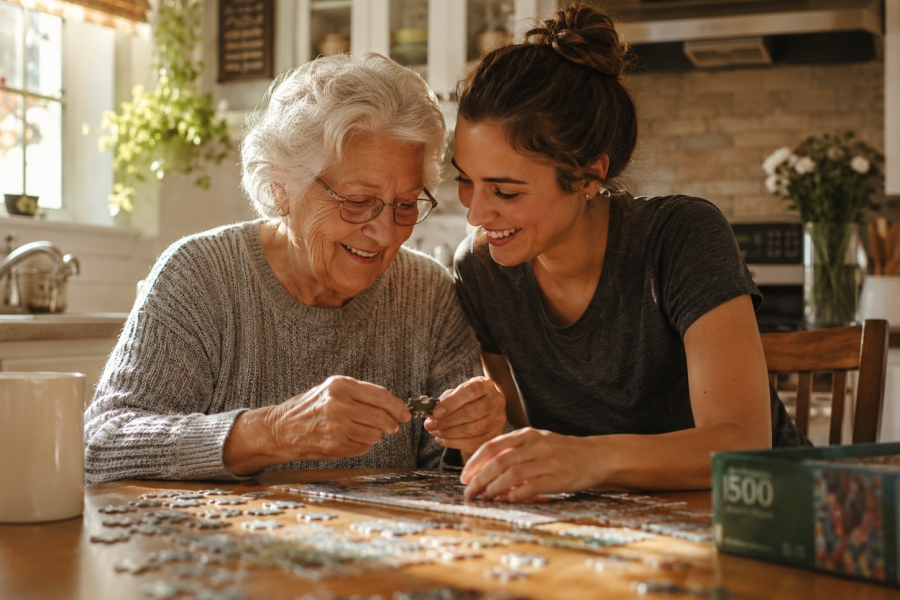
- Puzzles and games that require planning ahead, like crosswords, jigsaw puzzles, or bridge
- Taking a class at a local community center, library, or online, which the Alzheimer’s Association lists among its healthy brain habits
- Trying a new hobby that involves both the hands and the mind, such as cooking a new cuisine or learning to paint
The exact mechanism is still being studied, and no single activity is a guarantee against cognitive decline. What the evidence generally supports is that a mix of mentally engaging, physically active, and socially connected habits tends to support brain health better than any one habit alone.
Hearing and Vision: A Bigger Piece of the Brain Health Picture Than Most People Realize
Hearing and vision loss are common as people age, and both are often waved off as a normal, harmless part of getting older. The research says otherwise. Of everything researchers can currently measure and address, treating hearing loss has been described by the Alzheimer’s Association as potentially the single largest dementia risk factor that can be addressed with tools already available today. Vision loss is a newer addition to that same conversation. This is not a minor side note to brain health. For many families, it may be one of the more actionable pieces.
Hearing Loss and Cognitive Decline: What the Research Shows
- Older adults with untreated hearing loss have consistently been found to have a higher risk of dementia than those with normal hearing, with the risk generally rising alongside the degree of hearing loss, mild, moderate, or severe
- The ACHIEVE trial, a large randomized study funded in part by the National Institute on Aging, found that older adults at higher risk for cognitive decline who used hearing aids for three years saw their rate of cognitive decline cut by close to half, compared to a control group
- Alzheimer’s Association chief science officer Maria Carrillo has described the ACHIEVE findings as evidence that hearing loss is potentially the largest dementia risk factor that existing tools, like hearing aids, can already help address
- Hearing loss affects a majority of adults over 60, and many people go years without treating it, often because they see it as a minor inconvenience rather than a health issue worth addressing
Researchers describe a few plausible reasons for the connection, and more than one may be at play at once. When the brain has to work harder to make sense of incomplete sound, it may have fewer resources left over for memory and reasoning. Hearing loss can also make conversations harder to follow, which can lead someone to withdraw from social situations, feeding into the isolation risk covered later in this article. Reduced sound input over time may also mean less overall stimulation reaching the brain. The exact mechanism is still being studied, but the practical takeaway is the same either way: treating hearing loss is one of the more concrete, evidence-backed steps available.
Vision Loss Is a Newer Part of the Same Conversation
Vision has drawn less attention than hearing so far, but interest is growing quickly. NIA-funded researchers studying both senses together have found that older adults with combined vision and hearing difficulties tend to show a higher risk of cognitive decline than those with either issue alone. As with hearing, the thinking is that reduced sensory input may leave the brain with less to work with, and vision problems can also make it harder to stay active, read, and navigate the kind of everyday environments that keep the mind engaged.
- Cataracts, glaucoma, and age-related macular degeneration are among the most common vision changes affecting older adults
- Many of these conditions are highly treatable, whether through updated glasses, cataract surgery, or ongoing specialist care
- A comprehensive eye exam can catch changes well before they become noticeable in daily life
What Families May Want to Consider
- A baseline hearing test, generally recommended starting in midlife and repeated periodically after that
- A comprehensive eye exam on a regular schedule, particularly for anyone noticing changes in reading, night driving, or general clarity
- Following up on a hearing aid or vision correction recommendation promptly rather than putting it off, since the benefit appears tied to consistent use over time
- Bringing up hearing or vision concerns at a regular checkup, even if they seem minor or gradual
None of this guarantees a particular outcome, and hearing or vision loss does not mean dementia is inevitable. What the current evidence generally supports is that treating these two common, very manageable conditions may be one of the more concrete things a person can do for long-term brain health, alongside the habits covered elsewhere in this guide.

The Hidden Risk of Isolation
Social isolation and loneliness are more common among older adults, often due to retirement, the loss of a spouse or close friends, health changes that make getting out harder, or, as covered above, untreated hearing loss making conversation feel like more effort than it’s worth. The National Institute on Aging notes that isolation and loneliness carry real risks for physical, mental, and cognitive health, not just emotional wellbeing.
- Isolation and loneliness are considered separate but overlapping issues: a person can live alone without feeling lonely, or feel lonely even while surrounded by people
- Both have been linked in NIA research to a range of poor health outcomes among older adults
- Regular phone calls, video chats, or in-person visits with family and friends can help maintain a sense of connection
- Local senior centers, faith communities, and volunteer opportunities are common, low-cost ways to build regular social contact
- A local Area Agency on Aging, found through the Eldercare Locator, can point families toward senior centers, transportation help, and other community programs
For families of an aging parent who lives alone or far away, a regular check-in call or visit does double duty: it supports the parent’s wellbeing and gives the family an easier way to notice if something seems different.
Purpose and Connection Matter for the Brain Too
Beyond specific brain exercises, a sense of purpose tends to matter for healthy aging. That can look different for everyone: volunteering, mentoring, caregiving for a grandchild, tending a garden, or staying active in a faith community or club.
- Volunteering or mentoring, which combines social contact with a sense of contribution
- Caregiving roles, such as helping with grandchildren, which many older adults find meaningful
- Creative or physical hobbies that offer something to look forward to each week
- Staying involved in a faith community, club, or regular group activity
None of this needs to be elaborate. Small, consistent routines that mix mental engagement, movement, and connection with other people tend to add up more than any single activity done occasionally.
When to Talk with a Doctor
Some memory changes are a normal part of aging, like occasionally misplacing keys or pausing to recall a name. Families may want to consider bringing up more noticeable changes with a doctor, such as getting lost in familiar places, repeating the same questions, or a change that a family member notices and describes as out of character. A doctor can help sort out what is a typical age-related change from something that may need further evaluation.
Building Mental Fitness into Everyday Life
Protecting cognitive health as you age tends to come down to a handful of ordinary habits practiced consistently: staying curious, getting hearing and vision checked, staying connected to other people, and finding some sense of purpose day to day. For families supporting an aging parent, Senioridy’s directory of in-home senior care can help when extra support at home would make it easier for a loved one to stay active, engaged, and connected in the place they know best.
This article is for informational purposes only and does not constitute medical, legal, or financial advice. Always talk with a doctor or other qualified health care provider about any changes in memory, thinking, hearing, or vision, especially if those changes seem sudden or are affecting daily life. For free, personalized help finding local support for older adults, including senior centers and social programs, contact your local Area Agency on Aging through the Eldercare Locator at eldercare.acl.gov, available nationwide at no cost.