

Falling is one of the most common ways an older adult’s independence gets interrupted, but it’s also one of the more preventable ones. Strength and balance both decline gradually with age, and the encouraging part is that both respond well to regular, ability-appropriate training. This guide breaks down strength and balance basics by starting point, from adults who are still quite active to those managing significant mobility limits, along with guidance on when it makes sense to bring a doctor or physical therapist into the process.
For many families, the first sign isn’t a fall at all. It’s smaller than that: a parent who grips the counter a little longer before letting go, takes the stairs one at a time holding the rail, or starts turning down a walk they used to take without a second thought. Those small adjustments are worth paying attention to, because they’re often the point where a bit of targeted training can make the biggest difference.
Senioridy’s How Long Are You Prepared to Live? touched on strength and balance as one piece of a broader longevity picture. This guide goes deeper into that piece specifically, with exercises organized by ability level.
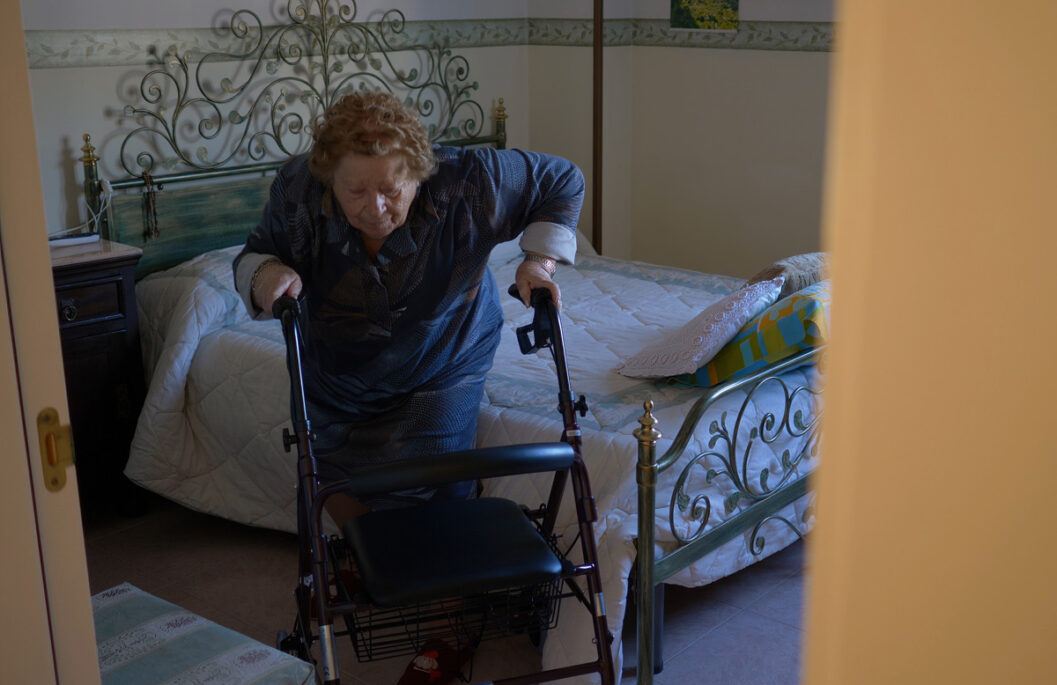
Why Strength and Balance Go Together
- Muscle mass and power tend to decline with age, a process sometimes called sarcopenia. Research from the National Institute on Aging’s long-running Baltimore Longitudinal Study of Aging found that this decline generally accelerates after age 65 for women and age 70 for men, though it can be substantially slowed with regular activity.
- Balance depends on several systems working together, including muscle strength, joint stability, inner ear function, and vision. Training that only addresses one piece of that system tends to help less than a combined approach.
- Guidelines from the National Institute on Aging generally recommend that older adults include muscle-strengthening and balance activities at least twice a week, alongside aerobic activity like walking.
Finding the Right Starting Point
Ability level matters more than age when choosing where to begin. These three general starting points can help identify a reasonable place to start, though a physical therapist can offer a more individualized assessment for any specific condition or history.
Active and Independent
- Walks, gardens, or moves around the community without assistance on a regular basis
- May be ready to add resistance training one to two times a week using hand weights, resistance bands, or bodyweight moves
- Goal is generally to maintain strength and balance proactively, before any decline becomes noticeable
Managing Some Limitations
- Living with joint pain, arthritis, a prior fall, or a chronic condition that affects balance or stamina
- May want to consider starting with chair-assisted or wall-supported versions of exercises before progressing to standing or unsupported versions
- Checking in with a doctor before starting is generally a good idea when other health conditions are involved
Very Limited Mobility or Chair-Based
- Seated exercises can still build meaningful strength and support circulation, even with significant mobility limits
- Small, gentle range-of-motion movements done consistently tend to matter more than intensity
- A physical or occupational therapist can tailor a program around a specific diagnosis, walker, or wheelchair

Strength Exercises to Try
- Chair stands: practicing standing up and sitting back down, using the arms for support as needed and working toward using them less over time
- Wall push-ups: a lower-intensity variation of a standard push-up, performed standing and facing a wall
- Seated leg lifts and marches: extending or lifting the legs while seated to build lower-body strength
- Resistance band rows and presses: a low-impact way to build upper-body strength for adults who are more active
- Carrying light household items, such as canned goods, as an introductory alternative to hand weights
Balance Exercises to Try
- Standing on one foot near a sturdy chair or countertop for support, holding briefly before switching sides
- Heel-to-toe walking along a hallway, placing one foot directly in front of the other
- Tai chi or gentle yoga, often offered through local senior centers or community classes, which combine slow movement with balance work
- Standing marches, gently lifting the knees one at a time while holding onto a stable surface
Working With a Doctor or Physical Therapist
- Checking in with a doctor before starting a new routine is generally recommended after a recent fall, hospitalization, surgery, or a new diagnosis that affects mobility
- A physical therapist can assess specific risk factors and build a plan suited to an individual’s needs and goals
Medicare Part B generally helps cover outpatient physical therapy when a doctor or other health care provider certifies that it’s medically necessary. Details are available through Medicare’s physical therapy coverage page.
- Families with questions about coverage may want to reach out to their doctor for a referral, or contact their State Health Insurance Assistance Program (SHIP) counselor for free, personalized guidance
How This Connects to Fall Prevention
Falls remain one of the most common ways an older adult’s independence gets interrupted, and the National Institute on Aging notes that regular strength and balance training is one of the more effective ways to lower that risk over time. It works alongside other steps families often take together, like addressing home hazards.
For families also looking at the physical space itself, Senioridy’s room-by-room home safety guide walks through common hazards and modifications that pair naturally with a strength and balance routine.
Getting Started
Consistency tends to matter more than intensity when it comes to strength and balance training. Starting small, whether that’s a few minutes of chair stands or a short daily walk down the hallway, and building from there with a doctor’s input, is a reasonable approach for almost any starting point.
This article is part of Senioridy’s Senior Health and Fitness hub, where additional guides on healthy aging continue to be added over time.
If a loved one could use some extra support staying active and safe at home, Senioridy’s in-home care directory can help families search for in-home care options near them.
This article is for informational purposes only and does not constitute medical advice. Always talk with a doctor or physical therapist before starting a new exercise program, especially after a recent fall, surgery, or diagnosis affecting mobility. For free, personalized Medicare guidance, contact your State Health Insurance Assistance Program (SHIP) counselor at shiphelp.org, available in every state at no cost.